Do Less, Be More

Amy Morrison • August 22, 2026

To Be or Not To Be, that is the question.
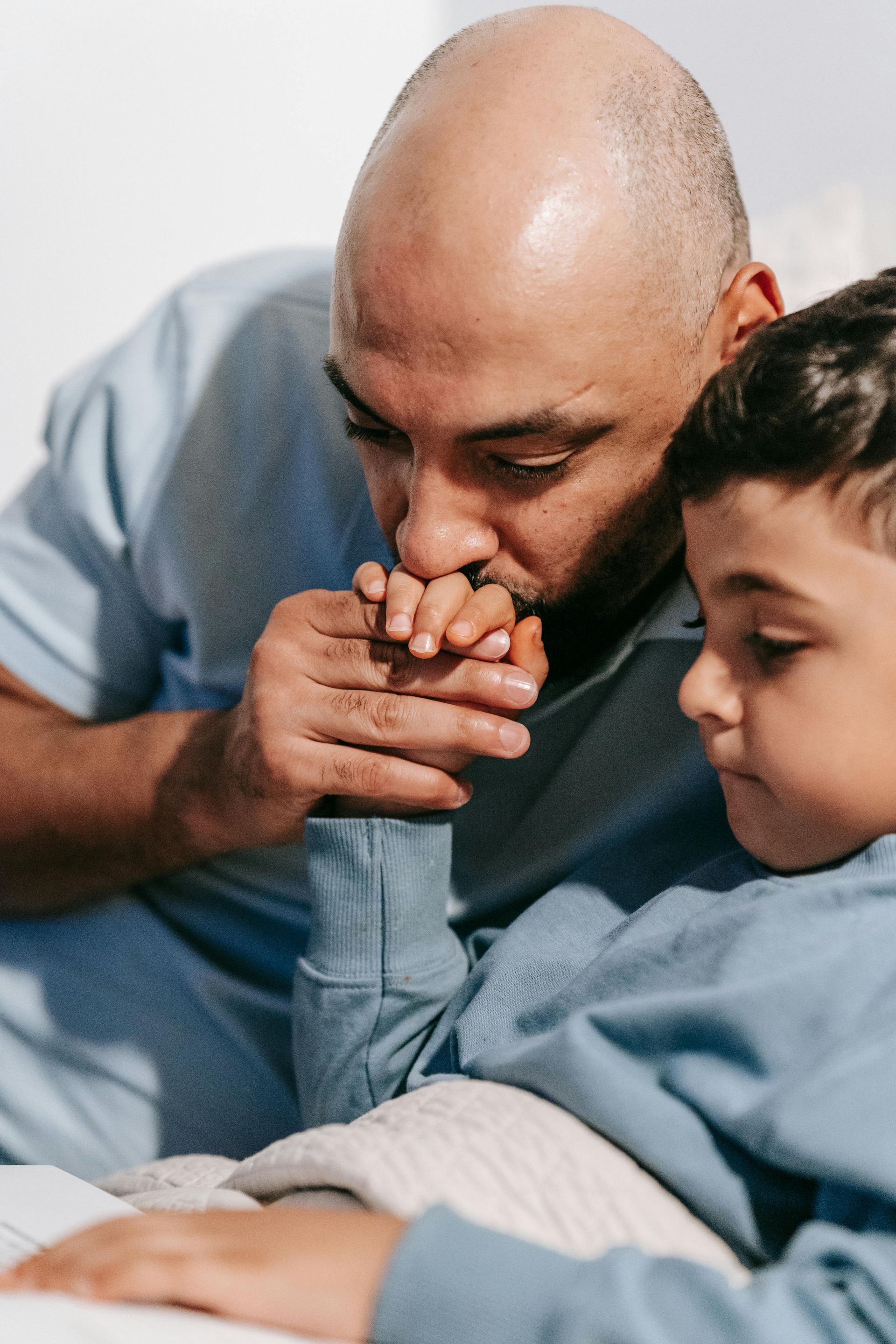
What does it mean to “be a parent”? 


For many parents, very little conscious and deliberate thought is put into the meaning of this work (because it IS work, not just a job). 


Commercials have sold us on images of what parenting looks like—coaching the kids soccer team or driving a van full of kiddos for carpool, but what does YOUR parenting look like?


Think about your day. Imagine you have a camera recording your family’s daily life.


How much of the day is spent with your child(ren)? 


How much of that time is spent one-on-one vs alongside them as an accessory?


How much of the day is spent planning activities, coordinating events, scheduling appointments for your child(ren)? 


I call these things “doing parenting”. Stuff we do with, or for, our kid(s) that are one part of the parenting equation, and often the part others see. When we overdo “doing parenting” we find ourselves a little disconnected because we’re often stuck in a loop of checking off boxes, getting from thing to another, and working on a timeline. 


Now let’s go back to the question and remove the physical “doing” work as we ponder again what it means to be a parent.


Does it mean:

·      being a role model? 

·      being a disciplinarian or someone who helps them learn about outcomes and consequences? 

·      being a protector? 

·      being a cheerleader and source of encouragement?

·      being a listener?


You could likely add many more titles and adjectives, but I presume you get the gist of the exercise. 


When you shift to “do less” maybe you can “be more”. 


Doing less might feel uncomfortable for a while; that’s likely just fear bubbling up inside you. Fear of judgement (“What will the other families think if we stop going to gymnastics?”), fear of the unknown (“Won’t my child be bored if they don’t have an after-school activity every day/What will they do all day?”), and fear of rejection (“If I say no, my kid will become a social leper.”) are common parenting fears that cause us to stay in the doing loop. 


The doing loop is short term success. When we spend too much time and energy parenting from this place it doesn’t feel good because there’s no real connection. And humans need connection, especially young humans. 


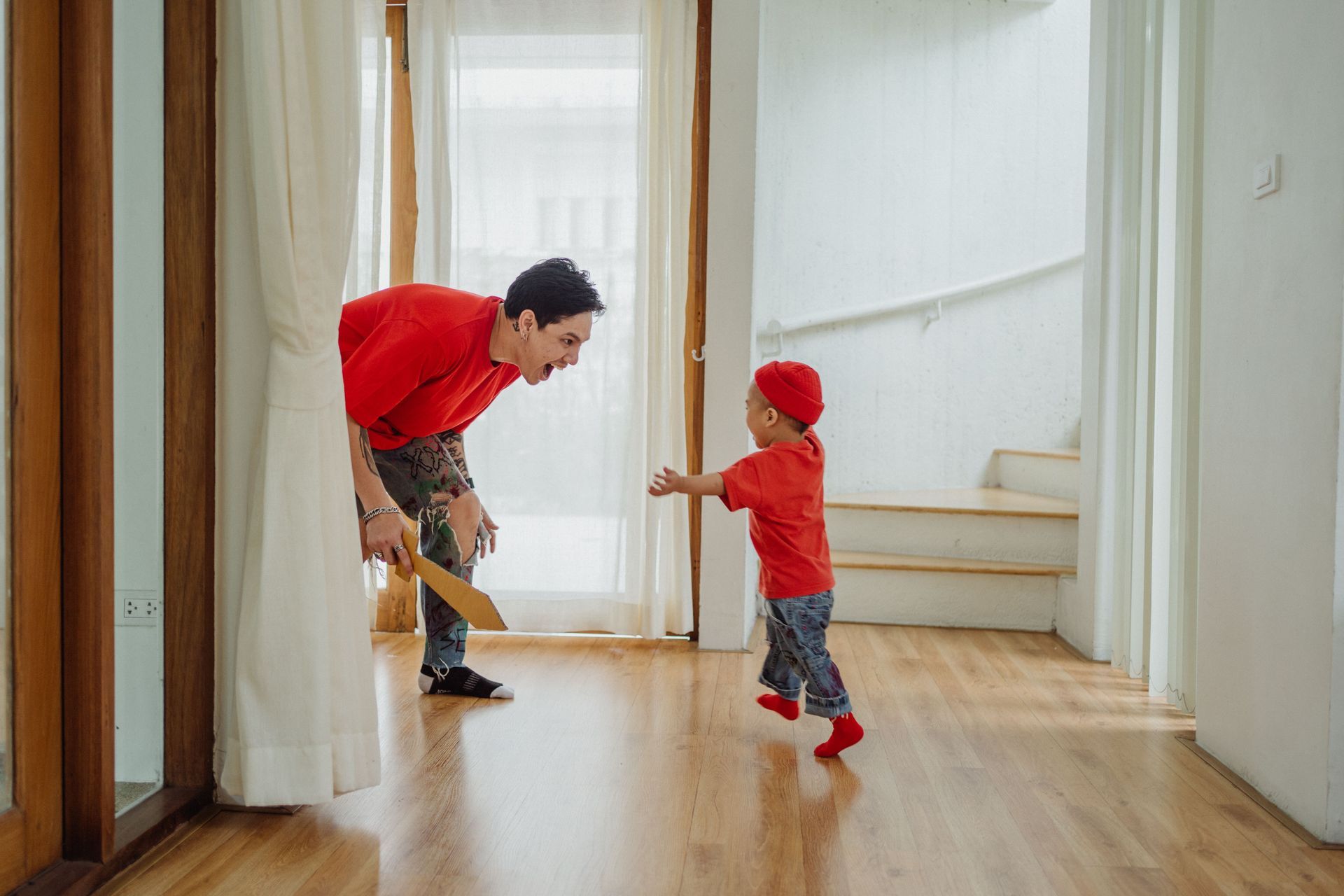
When we shift our parenting to the “being” state of mind, we might find ourselves:

·      playing with or alongside our child(ren)

·      letting them be the car dj and singing along to every song they choose

·      listening without interrupting

·      asking them what would feel good, rather than making the decision without consulting them first

·      having a movie night in (no phones allowed)


Love is felt through moments of connection. So as you build your back-to-school schedules, be sure to make time for being with your kiddo(s). Your presence teaches them more valuable skills than your pocketbook ever could. 


With peace & love,

Amy

By Amy Morrison June 30, 2026
Let's call summertime what it really is.
By Amy Morrison May 11, 2026
Tips for Raising Children in an Anti-Hypermasculine Way
By Amy Morrison September 26, 2025
In my early 20’s, I lived in the heart of a big, vibrant city, freshly transplanted from a midwestern town. I was very newly married and I worked with kiddos who were impacted by a life-threatening illness or condition. By the time I was 26, I had graduated with a Master’s Degree in Child Development. I share those stats because, by most accounts, I had all the boxes checked for what might be the basis for a stable home for a child. But checked boxes doesn't always equate, or even predict, success. {Note: It’s cool if you did become a parent in your twenties or younger. I’m just sharing hindsight about why this worked out in my favor, k? No hate talk, because what I’m about to tell you is personal and flows with science and it’s not okay to mock either one of those things here. Thanks for understanding…carrying on with your reading.} Although I didn’t have the young girl fantasies of playing house or being a mom, it wasn’t that I was against that path either. I just didn’t see myself on it. (That’s because I didn’t know all the different roads that might lead to motherhood… but that’s for another post.) I spent most of my second decade of life doing what many people in their twenties do; learning how to be an employee, navigating all the responsibilities of living away from anything and anyone I knew, figuring out how to be in relationship with another adult, sharing space with that person, making sense of what overlapped between us and what didn't, and reacting to all of it. There are some moments I look back at now and cringe. I blame my behavior on being young, naïve, unexperienced, and desperate. I’m bagging on myself, but I’m not alone in this. Most people in this age group are blissfully unaware of what unhealthy patterns they carry, how they show up in relationships, and how to rebuild the hurting parts of themselves. In my twenties (and maybe even beyond), I just didn’t know myself yet. And that's why I'm glad motherhood came later for me. That twenty-something version of myself didn’t know the power of empathy yet. Sure, I had plenty of compassion, but I didn’t know my conditioned beliefs yet, because I wasn’t—couldn’t be--reflective at that time. I didn’t yet have the skills to take care of my inner child, let alone a real life child. Oh sure, I had the degree from the well-respected institute, but inner knowledge? Nope. You see, the brain takes approximately two and a half decades to fully mature. Researchers say anywhere between ages 24-28 is when the prefrontal cortex finally gets fully established. Skills like impulse control, planning, and judgement are handled in this part of the brain. These higher-order skills require higher-order processes. This all takes time (plus experiences) to develop. And it’s not like we get notification when the maturation is complete like we do with a software update. So hindsight and reflection is how we monitor our inner growth. We sometimes forget that young twenty-year olds are still in the developmental process. They’re still ripening. And, I’d argue that until the brain has finished cooking, we’re still trying on different costumes in life. We’re role playing a bit until we hit a point where our systems are ready to do the reflective and insightful work related to self-awareness. (And, yes, some people go their whole lives never even considering to do this work. But, if you're reading this, that's not you.) Becoming a parent is big responsibility. It takes resources. And not just financial—emotional--resources that call upon the higher order brain. Interestingly, the minimum age to adopt from some countries is around 30 years old. Coincidence? Perhaps not. What I know now, five decades in to life, is that becoming a parent in my 30’s allowed me time to grow. I’ll be honest, in some ways I envy the 20-something parents. They have energy. They’re more agile physically and mentally—they haven’t built as many rigid patterns yet. But if I had a chance to do it all over, have the same child, but at an earlier time in life, I wouldn’t do it. For me, and so many others I’ve coached, motherhood has really been the beginning of a personal quest to finding my core self. Not just about raising and walking alongside a child, but also re-raising and walking alongside myself, my inner child, and even my own parents and their inner-child-states. It gave me perspective to see the "why" behind my actions. I became aware of my auto-pilot mode. And I learned how to sort through my patterns and set aside the ones I’ve collected, but no longer need to carry throughout the years. I believe that children arrive in our lives at just the right time. But that “right time” can sometimes not make sense until much later. For anyone who's ever worried that they waited “too long” or have heard it’s “too late” to be a parent, maybe this post will resonate with you. Peace and love.
More Posts